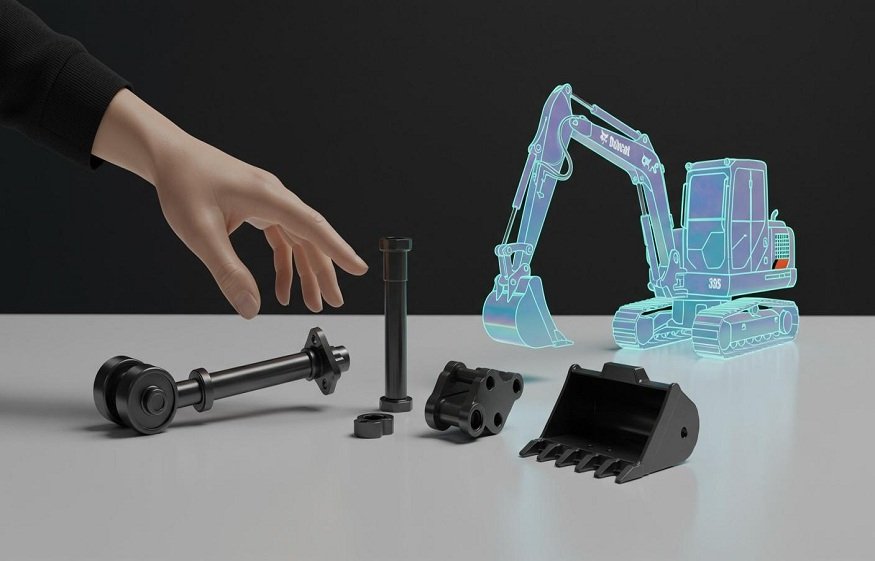

Bobcat excavator undercarriage parts should be replaced when they show excessive wear, damage, loss of track tension, repeated track derailment, or reduced machine performance. Components such as rubber tracks, rollers, idlers, sprockets, track chains, and track tensioning systems experience continuous friction and pressure during operation. Replacing worn parts at the right time helps prevent unexpected downtime, costly repairs, and damage to other undercarriage components.
For construction contractors, landscapers, excavation professionals, and equipment owners, regular undercarriage inspections are essential for maintaining reliable machine performance. Identifying early warning signs can help you plan repairs before a minor issue develops into a major mechanical problem.
This guide explains when to replace Bobcat excavator parts, which warning signs to watch for, what affects component lifespan, and how proper maintenance can help extend the service life of your equipment.
What Are Bobcat Excavator Undercarriage Parts?
The undercarriage is the lower assembly of an excavator that supports the machine’s weight, enables movement, and helps distribute operating loads across the ground. It is particularly important for compact and mini excavators that regularly work on construction sites, landscaping projects, and uneven terrain.
Depending on the machine model and configuration, the undercarriage may include the following components:
- Rubber tracks: Provide traction and help the excavator move across different surfaces.
- Track chains: Connect the moving track assembly in machines equipped with steel track chains.
- Track rollers: Support the machine’s weight and guide the track along the undercarriage.
- Front idlers: Guide the track and help maintain correct track alignment and tension.
- Drive sprockets: Engage with the track and transfer power from the drive motor to move the machine.
- Track tensioners: Maintain appropriate track tension and help prevent excessive looseness.
- Track guides and related hardware: Help keep the track aligned during operation.
Not every Bobcat excavator uses identical undercarriage components. The correct parts depend on the specific model, serial number, and track configuration.
Read More: JDM vs USDM engines: is the Japanese version actually better?
7 Signs You Should Replace Bobcat Excavator Undercarriage Parts
Recognizing wear early can help you avoid unexpected breakdowns and unnecessary damage to connected components. The following signs indicate that your excavator’s undercarriage may need inspection, adjustment, or replacement.
1. Rubber Tracks Show Cracks, Cuts, or Excessive Wear
Rubber tracks are exposed to abrasive surfaces, sharp debris, heavy loads, and repeated bending during operation. Over time, the rubber can deteriorate, reducing traction and increasing the risk of track failure.
Common warning signs include:
- Deep cracks along the rubber track surface.
- Cuts or tears that expose internal reinforcement.
- Missing or damaged rubber sections.
- Worn or damaged drive lugs.
- Repeated track slipping or derailment.
- Exposed reinforcement cords or visible structural damage.
Small surface cracks do not always mean immediate replacement is necessary. However, deep cuts, exposed reinforcement, damaged drive lugs, or structural deterioration require prompt assessment.
When to replace: Replace the rubber tracks when damage compromises structural integrity, traction, or reliable engagement with the drive system. Follow the manufacturer’s inspection and replacement guidance for your machine.
2. Track Rollers Develop Flat Spots, Leaks, or Excessive Play
Track rollers support the excavator’s weight while allowing the track assembly to move smoothly. Continuous loading, dirt, abrasive materials, and inadequate maintenance can accelerate roller wear.
Look for these warning signs:
- Visible flat spots or uneven wear on roller surfaces.
- Oil leakage from sealed rollers.
- Damaged roller flanges.
- Unusual grinding or rattling noises.
- Excessive movement or looseness.
- Uneven track movement during operation.
A worn roller may distribute the machine’s weight unevenly and cause additional wear on the track and other undercarriage components.
When to replace: Replacement is generally necessary when a roller has significant surface damage, a failed seal, excessive play, or other wear that affects proper operation. Minor issues should be evaluated first to determine whether replacement is necessary.
3. Drive Sprockets Have Worn or Damaged Teeth
Drive sprockets transfer power to the track assembly. Their teeth engage with the track drive lugs or chain, depending on the undercarriage design.
As the sprocket wears, its teeth can become pointed, hooked, uneven, or rounded. This can interfere with proper engagement and accelerate wear on compatible track components.
Common symptoms include:
- Unusual clicking or clunking during movement.
- Jerky or inconsistent track movement.
- Visible tooth deformation.
- Increased wear on the track drive lugs or chain.
- Repeated track disengagement.
- Reduced movement efficiency.
When to replace: Replace a sprocket when its teeth exceed the manufacturer’s wear limits, become damaged, or no longer engage correctly with the track. Inspect the tracks or chains at the same time because worn sprockets and tracks can accelerate each other’s deterioration.
4. Front Idlers Show Uneven Wear or Track Alignment Problems
Front idlers guide the track and help maintain its alignment. Damage or excessive wear can affect how the track travels around the undercarriage.
Potential warning signs include:
- Uneven wear across the idler surface.
- Visible cracks or deformation.
- Unusual noise near the front of the undercarriage.
- Track movement that appears misaligned.
- Repeated track derailment.
- Difficulty maintaining the recommended track tension.
Track misalignment is not always caused by a damaged idler. Incorrect tension, worn rollers, damaged guides, or debris can produce similar symptoms.
Read More: Grading and Leveling: A Beginner’s Guide to a Smooth Finish
When to replace: Replace the idler when inspection identifies damage, excessive wear, or a failure that prevents proper track guidance. Check related components before installing a replacement to prevent the same problem from recurring.
5. Track Tension Cannot Be Maintained
Correct track tension is essential for safe and efficient excavator operation. A track that is too loose may derail, while an excessively tight track can increase stress on the rollers, idlers, sprockets, and drive system.
Signs of a track tension problem include:
- Tracks that repeatedly become loose.
- Frequent track derailment.
- Excessive sag or movement.
- Abnormal undercarriage noise.
- Uneven wear across track components.
- Visible leakage or damage around the tensioning mechanism.
Track tension can change because of wear, debris buildup, damaged components, or problems with the tensioning system.
When to replace: Do not automatically replace the track whenever tension becomes incorrect. First, clean the undercarriage and check the tension according to the manufacturer’s procedure. If a tensioner, seal, spring assembly, or other component has failed, repair or replace the affected part as appropriate.
Never attempt to inspect or adjust a pressurized track tensioner without following the manufacturer’s safety procedures. The mechanism may contain stored energy that can cause serious injury.
6. Track Chains or Bushings Show Excessive Wear
Excavators equipped with steel track chains can experience wear in the links, pins, and bushings. These components are exposed to repeated loading and friction as the machine travels across the ground.
Warning signs include:
- Excessively worn or elongated chain assemblies.
- Loose or damaged track links.
- Worn pins and bushings.
- Uneven movement or abnormal noise.
- Poor engagement between the chain and sprocket.
- Wear measurements that exceed manufacturer specifications.
Chain wear may develop gradually, making periodic measurements more useful than relying on visual inspection alone.
When to replace: Replace worn chain components or the chain assembly when measurements exceed the manufacturer’s service limits or when damage compromises safe operation. Depending on the condition and design, individual components or a complete assembly may require replacement.
7. Undercarriage Noise, Vibration, or Movement Becomes Abnormal
Changes in machine movement can indicate that one or more undercarriage components are worn, damaged, loose, or misaligned.
Pay attention to:
- Grinding, clunking, or repetitive clicking.
- Excessive vibration while traveling.
- Uneven movement between the tracks.
- Increased difficulty turning.
- Repeated track slipping.
- Visible damage following operation over rough terrain.
These symptoms can also result from drive motor problems, hydraulic faults, debris trapped in the undercarriage, or other mechanical issues.
When to replace: Stop and inspect the machine when unusual noises or movement occur. Identify the underlying cause before replacing parts. Continuing to operate an excavator with a suspected mechanical failure can increase damage and create safety risks.
How Long Do Bobcat Excavator Undercarriage Parts Last?
There is no single replacement interval that applies to every Bobcat excavator. Undercarriage life depends on the machine model, operating hours, ground conditions, maintenance practices, operator behavior, and component quality.
The following table provides a general inspection framework rather than guaranteed service-life estimates.
| Component | What affects service life? | When replacement may be needed |
| Rubber tracks | Abrasive surfaces, sharp debris, turning habits, tension | Structural damage, worn drive lugs, or traction loss |
| Track rollers | Machine load, contamination, lubrication or seal condition | Failed seals, excessive play, or wear beyond limits |
| Drive sprockets | Track condition, alignment, operating hours | Deformed teeth or excessive measured wear |
| Front idlers | Track tension, alignment, impacts, contamination | Damage, uneven wear, or failure to guide the track |
| Track chains | Abrasion, loading, alignment, lubrication where applicable | Excessive elongation, damaged links, pins, or bushings |
| Track tensioning components | Leakage, wear, damage, maintenance practices | Failure to maintain correct tension |
Actual service life can vary considerably. Avoid replacing components solely because they have reached a particular number of operating hours. Instead, combine regular inspections with manufacturer-recommended measurements and maintenance intervals.
What Factors Cause Bobcat Excavator Undercarriage Parts to Wear Out Faster?
Understanding the causes of premature wear helps equipment owners make better maintenance decisions.
Operating on Abrasive or Rocky Ground
Rock, gravel, demolition debris, and other abrasive materials can accelerate wear on rubber tracks, rollers, sprockets, and chain assemblies. Sharp objects can also cut rubber tracks or damage exposed components.
Whenever possible, remove debris from the undercarriage and inspect it after working in demanding conditions.
Incorrect Track Tension
Incorrect track tension can increase wear across multiple components. Excessively tight tracks place additional loads on the undercarriage and drive system, while loose tracks may slip or derail.
Check track tension using the procedure and specifications provided for your particular Bobcat model.
Frequent Turning on Hard Surfaces
Repeated tight turns, counter-rotation, and aggressive maneuvering on concrete or other hard surfaces can increase friction and stress on the track assembly.
Use smooth, controlled movements when the worksite allows it, and avoid unnecessary sharp turns.
Poor Undercarriage Cleaning
Mud, clay, rocks, and compacted debris can collect around rollers, idlers, and sprockets. This buildup may interfere with track movement and make wear or damage harder to identify.
Clean the undercarriage regularly, particularly after working in muddy or debris-filled conditions.
Overloading and Improper Operation
Operating beyond the machine’s rated capabilities or using unsuitable attachments can increase stress on the undercarriage and other systems.
Follow the manufacturer’s operating limits and use attachments approved for the machine’s configuration.
Delayed Repairs
A worn sprocket can accelerate track wear, while a damaged roller or idler can contribute to alignment problems. Replacing only the visibly damaged component without checking related parts may lead to repeat repairs.
Inspect connected components whenever you identify significant wear or damage.
Should You Replace Individual Undercarriage Parts or the Entire Assembly?
The right replacement strategy depends on the extent of wear, component compatibility, repair costs, and the condition of related parts.
Replace Individual Components When Wear Is Limited
Replacing one component may be appropriate when the remaining undercarriage is in good condition and the damaged part can be replaced independently.
For example, a failed roller or damaged idler may not require replacement of the entire undercarriage. A technician should confirm that the remaining components are within acceptable wear limits.
Consider Multiple Replacements When Wear Is Widespread
When the tracks, sprockets, rollers, and other components show substantial wear, replacing multiple parts together may be more practical than completing repeated repairs.
A worn drive sprocket installed with a new track can accelerate wear on the replacement track. Similarly, installing new components without checking related parts may reduce their service life.
Compare the Total Cost of Repair
When deciding between individual and multiple component replacements, consider:
- The price of replacement parts.
- Labor and machine downtime.
- The condition of related components.
- The likelihood of repeat repairs.
- Compatibility with the machine’s model and serial number.
- Manufacturer service recommendations.
A professional inspection can help determine whether individual replacement, a partial rebuild, or a broader undercarriage repair is the most cost-effective option.
How to Inspect Bobcat Excavator Undercarriage Parts
A consistent inspection routine helps detect problems before they interrupt work.
Step 1: Park the excavator safely. Place the machine on stable, level ground where possible, lower the attachment, shut down the engine, and follow the manufacturer’s shutdown and isolation procedures.
Step 2: Remove accumulated debris. Clear mud, rocks, and other material that may hide wear or interfere with movement. Follow safe cleaning procedures and avoid reaching into moving or hazardous mechanisms.
Step 3: Inspect rubber tracks or track chains. Look for cuts, cracks, missing sections, damaged links, and other visible defects.
Step 4: Check rollers, idlers, and sprockets. Look for uneven wear, leakage, deformation, damaged teeth, and signs of misalignment.
Step 5: Check track tension. Use the exact inspection and adjustment procedure specified for the machine. Do not rely on a universal tension measurement for all Bobcat models.
Step 6: Listen for unusual operating symptoms. If a controlled operational check is necessary, follow the operator’s manual and keep people clear of the machine. Stop if abnormal noise, vibration, or movement occurs.
Step 7: Record wear and maintenance findings. Track operating hours, inspection dates, measurements, repairs, and parts replaced. Comparing inspection records helps identify recurring problems and plan future maintenance.
If a component is cracked, structurally damaged, leaking, or beyond its service limits, arrange a qualified inspection and repair before continuing normal operation.
How to Choose the Right Replacement Bobcat Excavator Undercarriage Parts
Selecting compatible replacement parts is just as important as recognizing when replacement is necessary. An incorrect component may not fit properly or may fail to perform as intended.
Before ordering, verify the following:
- Machine model: Identify the exact Bobcat excavator model.
- Serial number: Use the machine’s serial number to check the applicable parts information.
- Part number: Compare the existing part number with the replacement listing or parts catalog.
- Track configuration: Confirm the correct track type, dimensions, and undercarriage setup.
- Component specifications: Check measurements, mounting points, and compatibility with related parts.
- Supplier information: Review product descriptions, compatibility details, warranty terms, and return policies.
Do not assume that parts designed for two visually similar Bobcat excavators are interchangeable. Specifications can vary by model, production year, and machine configuration.
If the correct part is unclear, consult the machine’s parts catalog or a qualified parts supplier before placing an order.
Frequently Asked Questions
1. When should Bobcat excavator rubber tracks be replaced?
Replace rubber tracks when they have structural damage, exposed reinforcement, severely worn drive lugs, or significant traction problems. Follow the manufacturer’s inspection criteria and have questionable damage assessed before continuing operation.
2. How do I know if my excavator sprocket is worn out?
Look for hooked, pointed, rounded, or unevenly worn teeth, along with unusual track noise or poor engagement. Compare measured wear against the manufacturer’s specifications before deciding whether replacement is necessary.
3. Can I replace one Bobcat excavator undercarriage part at a time?
Yes. Individual replacement can be appropriate when the affected component is independently serviceable and the other parts remain within acceptable wear limits. However, related components should be inspected to avoid premature wear on new parts.
4. Why does my Bobcat excavator keep throwing a track?
Possible causes include incorrect track tension, worn sprockets, damaged idlers, worn rollers, alignment problems, or debris buildup. Inspect the complete track system rather than assuming the track itself is the only problem.
5. Do all Bobcat excavators use the same undercarriage parts?
No. Undercarriage components vary by machine model, serial number, track configuration, and production specifications. Always confirm compatibility before ordering replacements.
6. How can I extend the life of Bobcat excavator undercarriage parts?
Clean the undercarriage regularly, maintain correct track tension, avoid unnecessary sharp turns on abrasive surfaces, inspect wear-prone components, and address problems promptly. Following the manufacturer’s operating and maintenance recommendations is essential.
7. Should I replace the sprockets when installing new excavator tracks?
Not always. Inspect the sprockets and measure wear against the manufacturer’s limits. If the sprockets are significantly worn, replacing them alongside the tracks may help prevent premature wear on the new components.
8. Where can I find compatible Bobcat excavator undercarriage parts?
Start with the machine’s model and serial number, then use the manufacturer’s parts catalog or a supplier that provides clear compatibility information. Confirm the exact component specifications before ordering.
Conclusion
Replacing Bobcat excavator undercarriage parts at the right time helps maintain traction, machine stability, operating efficiency, and equipment reliability. Cracked rubber tracks, worn sprocket teeth, damaged rollers, failing idlers, incorrect track tension, and excessive chain wear are all signs that an inspection is necessary.
The most effective approach combines regular maintenance, accurate wear measurements, and timely replacement of damaged components. Checking related parts before completing a repair can also help prevent repeat failures and unnecessary downtime.
For equipment owners and maintenance professionals looking for replacement components, CR Components is a resource to consider when sourcing Bobcat excavator parts. Verify product availability and machine compatibility before ordering to ensure the replacement parts match your excavator’s specific requirements.